Thursday, November 10, 2011

Times That Try Men’s Souls

NEW YORK, NY - OCTOBER 11:  Honoree Daniel Rose attends the 6th annual Police Athletic League Building New York's Future luncheon at The Pierre Hotel on October 11, 2011 in New York City.
by Daniel Rose


The failure of America’s political leaders across the spectrum to explain to the public the serious long term, intermediate term and short term challenges we face has caused us unnecessary pain, turmoil and widespread loss of public confidence in government. Their failure to deal effectively with those challenges has put our national well-being in jeopardy. Widespread protests from left and right may lack a coherent agenda, but the public knows that something is wrong; and they demand to hear the truth.

Liberals refuse to acknowledge that we must live within our means; conservatives refuse to acknowledge the economic and social imbalances that threaten to strangle our society. Both confuse symptoms with causes and the cyclical with the structural; both use the current turmoil to further their ideological goals. As a result, both give the impression of being long on cleverness and short on integrity. Neither faces the long term ramifications of an economy shifting from industrial production to services and information, or the emergence of a single global market for goods, labor and capital, or growing inter-generational economic tensions. Neither encourages the deferred gratification and future-mindedness that underlie all successful societies.

America’s declining rate of social mobility, our diminishing ability to influence the world beyond our borders, the relative shabbiness of our national physical facilities, the deteriorating quality of life—none is pre-ordained, none is inevitable. All are the result of bad governmental decisions and a public demanding much but willing to pay for little—“self-inflicted wounds” that can be reversed.

When we eventually deal effectively with the problems of education, infrastructure, foreign trade, industrial policy and social mobility, we will regain the forward momentum we had before this “lost decade,” and our government will regain the public trust it has lost.

Subtle changes in the American psyche, influenced by European thinking, have caused our public to focus on “today” vs. “tomorrow,” on “rights” vs. “obligations,” on “entitlements” vs. their financing. All spell trouble, as does the Left’s demand for “equality of result” rather than “equality of opportunity” or the Right’s belief in “everyone for himself and the Devil take the hindmost.”

Our common goals—a fair and just society, with opportunities for advancement for talent and effort, with an appropriate balance between public and private amenities, with the rewards and obligations of citizenship rationally apportioned—are achievable over time; but current realities are discouraging, and public expectations are unrealistic.

Aristotle might cite the “efficient cause” of our current predicament as our dysfunctional mechanics of government—electoral gerrymandering, arm-twisting political lobbyists, the legalized bribery we call “campaign contributions.” The “formal cause” he might cite as the preposterous cost of political campaigning. Until we address these causes, we are unlikely to get the kind of responsible legislative bodies—and responsible legislation—our Founding Fathers envisioned.

The coming American “new normal,” a society stratified along educational lines, with growing numbers of the under-educated having no economically-productive role, is rapidly becoming a fact of life. The wage premium of intellectual over manual labor continues to surge, even as recent college graduates find jobs scarce. How we increase the size of our national economic pie and how we divide it appropriately are challenges we must face—the sooner the better.

We have seen middle class wages stagnate so that workers can no longer afford the goods and services whose purchase the economy requires to keep growing. The top one per cent of our public receives one quarter of our national income, the top five per cent receive 37%; and 95% of the public must limit their expenditures. The last time we had similar numbers was in 1928.

The national macro-numbers today are frightening. With a GDP of $15 trillion, U.S. public debt to others is now $10 trillion and intergovernmental debt is over $4 ½ trillion, with the total growing at the rate of $1.5 trillion a year. The present value of our existing unfunded domestic entitlements is huge; common estimates put them at $66 trillion: $35 trillion for Medicaid, $23 trillion for Medicare and $8 trillion for Social Security. Of 51 million private homes with mortgages, 15 million are worth less than their debt. Three million homes were foreclosed last year; another six million are in arrears. Our national unemployment rate is over 9%, and millions of workers have given up looking for work. The unemployment benefits of some 4 million may expire this year. Student loans now total over a trillion dollars, and the rising default numbers are ominous. Opinion polls universally show a public anxious and pessimistic, pleading for government’s pragmatic compromise on vital issues.

We must consider—calmly and rationally—where our economy is and where it is heading. We can no longer afford the luxury of allowing political polemic to drive reasoned argument from the stage, nor permit political candidates to see no further than the next election.

Just as our political parties cooperated in the national interest during the crises of WWI and WWII, they must cooperate in the current economic crisis. “Loyal opposition” is one thing; “rule or ruin” political maneuvering is another, and the climate in polarized Washington today is rightly called “obsessive obstructionism.”

In light of the international embarrassment of Standard and Poor’s credit downgrade, history will deal harshly with our Congressional leaders, and those like Grover Norquist, leader of the “No Tax Increase—of any kind, at any time, for any reason” movement and his efforts to demand No Tax pledges from all Republican candidates (with the threat of running further-to-the-right primary opponents against them).

The left must face the ramifications of an aging and longer-living population, of a public education system falling seriously behind global standards, of government employee benefits out of sync with those of the rest of society.

Grover Norquist may wish government reduced to “the size where I can drag it into the bathroom and drown it in the bathtub (sic),” but most of us do not. We want government services and we must pay for them by taxation. Edmund Burke, the father of modern conservatism, put it succinctly—“To tax and to please is not given to men.” Europe has found that Value Added Taxes, although regressive, are the least objectionable way to raise revenue. If we cannot face other forms of taxation, we, too, must consider them. One way or another, cutting expenditures and increasing revenues lie ahead of us.

Few observers would disagree that free market economies are more productive than rigidly controlled ones—leading to what Winston Churchill called “the unequal sharing of blessings vs. the equal sharing of miseries.” Few would disagree that to achieve optimum productivity and socio-economic stability, free market economies require some degree of government regulation. What that degree should be is “the question.”

John Maynard Keynes’ “interventionist” followers and Frederick von Hayek’s “hands off” supporters will always battle, but neither Keynes nor Hayek approved of swollen

government, and both agreed that over-indebtedness leads to financial nightmares. Short term “stimulus,” (preferably on desirable repairs to our deteriorating and inadequate infrastructure) to provide immediate employment, and longer term “austerity” (with renewed savings and investment for continuous growth) reflect the best thinking of both. The two trillion dollars respected engineers tell us we must spend on infrastructure—for repairs, upgrades and expansions—will provide short term jobs and long term economic and social benefits. Had we created an infrastructure bank (with an accelerated review process) three years ago, the results would already be apparent. Short term fears of deflation, long term fears of inflation and recurring fears of stagflation must be dealt with realistically and prudently.

A healthy economy requires a sensible balance between consumption and saving/investment. In America today consumption is tilted in favor of private consumer goods and against public goods such as airports, parks, highways, mass transit, etc. We mistakenly consider expenditure on education and scientific research as personal consumption rather than as national investment for the future. We are heavily over-invested in housing, which is not productive of future wealth. (Other countries do not share our fetish of home ownership nor our “conventional wisdom” that house prices must rise more than inflation.)

Our financial services industry, whose function should be to “oil the wheels” of society and to channel savings into productive enterprise, has become a world of its own, skimming a disproportionate share of the national income. In 2008, for example, the country’s top 25 hedge fund managers personally received $25 billion among them, largely through the legal scam of low tax “carried interest”; and corporate CEO’s receive huge bonuses even as their companies post major losses. No wonder our “best and brightest” are seduced by financial paper-shuffling rather than careers in the productive world. Eventually, even the investment world will realize that a smaller share of a growing economy is better for them than a larger share of a stagnant one.

National wealth cannot be distributed (or redistributed) until it is produced; we must focus as much on wealth production as on its division. Albert Einstein noted that, “In the real world, there are neither rewards nor punishments—only consequences.” We must act so that the consequences of our actions take us where we want to go.

Our economic problems are remediable—but not in the immediate future. America is a resilient society and we will muddle through, but we must modify our expectations for the short run and again think long run. As Adam Smith wrote, “There is a lot of ruin in a country,” and we have great strengths. To regain our national momentum—to refute those who speak of “American decline”—we must act vigorously and wisely. Three specific areas cry out for governmental attention: infrastructure, foreign trade and industrial policy. Our “public intellectuals” are remiss in not demanding that we address them.

Finally, and most importantly, we must address the long term challenge of providing productive employment for all those ready, able and willing to work. Today, one quarter of our young people drop out of high school before graduation, and we have no economic role for them. Those with college degrees do somewhat better—but not really well—graduate degrees or specialized skills are increasingly required for success in this information-fueled, high-tech world. Our workers are in competition with those of the rest of the world who are becoming better educated and vocationally-trained than U.S. workers. We either raise our educational and skill levels in STEM fields (Science, Technology, Engineering, Mathematics) or suffer accordingly. Increasing poverty, downward mobility and social turmoil are not impossible.

That is a “worst case.” A “best case” could occur if our disadvantaged poor—whether whites in the “hollows” of the rural South or minorities in the inner cities—develop the attributes demanded by a high tech, globalized, competitive world. Future-mindedness, self-discipline, the capacity for sustained hard work and a passion for education are the underpinnings of the self-confidence and high aspirations that lead to economic productivity and personal fulfillment.

Skin color, religion and ethnicity are fading rapidly as major factors in American life. Social culture—as reflected in attitudes, values and mindset—is paramount today, regardless of the fulminations of demagogues. Entrepreneurship, for example (which we need to encourage), requires a mindset of risk-taking, thinking “outside the box,” the ability to rebound from failure with renewed vigor, and the tenacity to hold fast to a creative vision, all of which are cultural, not ethnic. Jesse Jackson’s “perpetual victim” view of life should give way to W.E.B. DuBois’ call for the minority Talented Tenth to lead the way to the promised land.

Continuing economic growth is the answer to our employment problem, but such growth requires a revival of what Keynes called our “animal spirits,” based on confidence in prospects for the future. That confidence must be based on real world factors, and only political and legislative leadership can create those factors: improved education and vocational training, improved infrastructure, more astute foreign trade policy, a rethought national industrial policy and a more balanced national distribution of income and wealth.

Lowering the cost of political campaigning (by some form of public financing, or free access to TV) and tightening—not loosening—the regulation of political contributions (thereby lessening the influence of lobbyists), are important first steps, along with an end to political gerrymandering. Undue influence—whether of “fat cats” like the Koch brothers or the Forbeses or of labor leaders like Randy Weingarten—must be lessened. Political term limits and specific steps to increase transparency and accountability to voters should follow. In the meantime, we need more politicians like Teddy Roosevelt, of whom the “bosses” complained, “We bought him but he didn’t stay bought!”

“Let no good crisis go to waste” is a useful thought; but we must be sure that Schumpeter’s “creative destruction” is indeed “creative.” It will be worth our present pain and sacrifice if a healthier, more responsive political and legislative system results from it.

This past decade has been a difficult one for us, but we can snap back. “American exceptionalism,” in which I believe, has traditionally been based on underlying premises of “can do” pragmatism, fair-mindedness, generosity and optimism. We must not forget that.

Sheer demographics and economic projections indicate that with a global population of 7 billion people, America’s position in the world must in time change relatively. In absolute terms, great days can still lie ahead for our country.

The following points would speed our recovery:

Budget deficits should be recognized as short term expedients to “tide us over” cyclical downturns, and our debts must be paid down significantly as soon as budget surpluses from a growing economy permit.

Health care costs must be financed by actuarially-sound measures that are transparent and understood by all. In 2010 the U.S. spent 17.6% of its GDP on healthcare vs. an average of 9% for European countries, yet their life expectancies are higher than ours. We need better value for our health dollars. “Defined benefits” as a concept should yield to some form of a “defined contribution” approach because we can no longer afford the former today, much less when the WWII baby boomers retire.

Our system of taxation must be considered afresh, to promote investment and to raise future revenue. Eliminating many deductions and credits (e.g. from eliminating $150 billion a year to stimulate race horse breeding, whale hunting, etc., to rethinking deductibility of interest on home mortgages) in favor of lower marginal tax rates will provide a simpler and more efficient system. The byzantine U.S. Tax Code, thousands of pages written in technical jargon beyond the ken of a typical small businessman without expensive lawyers and accountants, is a national embarrassment without parallel in the developed world.

Lower taxes on U.S. corporations’ foreign earnings would encourage them to repatriate the cash (tax revenues for us, domestic investment money for them). Tax havens (such as the Cayman Islands or the Faroes), that serve no role other than tax evasion and money-laundering, should be subject to public scrutiny and international regulation.

Legislation which protects the banking system by distinguishing “depository” (savings/lending) banks from riskier “investment” banks (that trade for their own account) should be reinstituted, as advocated by the wise Paul Volcker. And the capital requirements of all banks (large and small, savings or investment) should be examined carefully. Protection of savers and investors and encouragement of lending are the goals. Private entities “too big to fail” are too big.

Unfunded, unaffordable pension programs of federal, state and municipal employees should be re-examined and discussed publicly. Logic calls for them to be brought into line with those in the private sector, regardless of the short term political battles that will cause.

Legal tort reform, regulatory reform and entitlement reform should be reviewed periodically for costs and benefits, goals and actual effects. There should be “full and frank discussions” before an informed public on these sensitive issues. Frivolous law suits should be discouraged by using the British practice of having losers pay court costs and legal fees.

Foreign trade should be encouraged, not discouraged, with the informed cooperation of business, labor and government, all concerned with the national interest. A clearly-enunciated “national trade policy” is long overdue. We must again become a successful trading nation, with high-wage, high-productivity jobs located in the United States profitably providing goods and services for the growing middle classes of the BRICs (Brazil, Russia, India, China). Trade policy should be all-encompassing; for example, tariffs on industrial production “inputs” should be eliminated so that U.S. producers are more competitive in the global economy.

Charges of growth-strangling costs of counter-productive federal regulations (especially on small business) must be investigated and, where justified, modified. Sarbanes-Oxley and Dodd-Frank legislation should be treated as “living documents” whose consequences and unintended consequences are reviewed periodically. Necessary environmental controls (which some business groups fight even in good times) must be differentiated from excessive controls (which ideologues support regardless of cost vs. benefits).

Our housing problem must be faced realistically. Americans have lost $7 trillion in home equity, and necessary “de-leveraging” will be slow and painful. It requires orderly debt restructuring, debt reduction and conversion of debt into equity, until normal market forces again bring equilibrium. Permitting foreclosed home owners to remain in residence as tenants, with modest rents and an option to repurchase, will prevent vandalism to the house and homelessness to the occupant. (The mortgagee will receive some income and some “shared appreciation” on the property’s eventual sale but would face some write down in the short run.) Enabling non-profit groups to own—and to rent out—foreclosed single family homes is another approach; and private investors can be encouraged to buy and rent out distressed single family houses. With housing production less than family formation, markets will stabilize in time, but in the meantime, first-time home buyers should be helped to absorb the current surplus of available houses; and existing home owners should be able to avail themselves of current low interest rates.

Those fortunate countries without a “sub prime” problem either have required a significant down payment on home mortgages and borrower incomes sufficient to pay debt service (e.g. Canada), or have not let mortgage originators bundle and sell loans (e.g. Denmark). For us, someday; but not yet.

Visas and “green cards” for post-graduate students, high tech practitioners and others who help our economy should be expedited, not only for their benefit but for ours. A remarkably high percentage of our innovative practices have come from immigrants or their children who have started 40% of our Fortune 500 corporations.

“Prevailing wage” laws have had a distorting impact on employment. General Motors, for example, has been able to hire thousands of workers recently when unions agreed to permit some “below-prevailing wages.”

Legitimate charitable contributions should be encouraged, not discouraged. The suggestion that they be taxed is the most counter-productive idea recently proposed, since a thriving philanthropic sector is now more important than ever. $300 billion in annual contributions employing 9% of the U.S. work force should not be diminished.

The multi-trillion dollar long term reductions in government expenditures being proposed are necessary, but some proposed cuts (such as Pell scholarship grants) are ill-advised.

The successful industrial policies of Germany, whose high-wage manufacturing sector is flourishing, should be an example for America. The manufacturing economic “multiplier effect” is much greater than that of the service sector.


Other questions to be pondered:

· Why should “second home” owners receive interest deductions on their mortgages?

· What inheritance should heirs receive free of all taxes, and what should graduated taxes be on larger estates?

· Should seniors, regardless of their ability to pay, receive medications free?

· Should Social Security be “means tested?”

· How should Internet purchases and services be taxed?

· Is it psychologically sound for one half the public to pay no federal income taxes at all?

· Why should tax rates on short term capital gains (less than one year) not be raised, while those on longer term (over a year) not be lowered? And how about a zero tax rate on newly-issued securities which fund growth?

· How should “short selling” be regulated, taxed and reported, and what are appropriate regulations and taxation for the $600 trillion “derivative” market. (Yes, the $600 trillion figure is “notional,” with much double-counting, but what a number!)

· Given our conflicting desires for “energy independence” and for a “green world,” how should oil and gas companies be taxed? And would not higher taxes at the gas pump curtail consumption as well as provide revenues?

America’s great days may still lie ahead, and some believe it to be inevitable. “The mode by which the inevitable comes to pass is called ′effort,′” said Oliver Wendell Holmes, and it remains to be seen if the American public will make the effort.

(Daniel Rose’s talks may be found on www.danielrose.org)

Raw Video: Arrests at UC Berkeley 'Occupy' Camp

Police in riot gear moved Wednesday night to break up a demonstration at the University of California at Berkeley that started when anti-Wall Street protesters tried to establish an encampment on campus. (Nov. 10)

Wednesday, November 9, 2011

The real Wall Street occupation is online


The Occupy Wall Street movement, now that it has broadened in scope beyond the financial district of Manhattan to attain a truly national — even global — scale has the potential to lay the groundwork for a new generation of start-ups capable of reshaping the financial system in radically new ways. These tech start-ups, while officially unaffiliated with the Occupy Wall Street movement, are nonetheless responding to the unmet needs of these protesters, individuals who feel abandoned by the current financial system.

The breakout company of the Occupy Wall Street movement thus far has been Palo Alto-based WePay, a start-up largely unknown until the protest movement began September 17. Over the past 45 days, WePay has become the de facto official way to send money to the “Occupy” protesters while simultaneously bypassing the largest financial institutions. At a time when many payment alternatives already exist, it’s more than a coincidence that an unknown technology player, free of any associations with the banking establishment, has emerged as the financial intermediary of choice. Just a few months ago, the obvious choice for sending money to an organization like Occupy Wall Street would have been PayPal, but that was before the company decided to cooperate with the financial embargo against WikiLeaks.

www.washingtonpost.com
The same 1’s and 0’s that transmit trillions of dollars worldwide can become the basis for a digital revolution in finance.

SOME RANDOM THOUGHTS FROM MY SCRAMBLED BRAIN: ON THE FUTURE OF “ROOM EIGHT NEW YORK POLITICS (www.r8ny.com)” AND BLOGGING IN NYC

Note from yourfreepress.blogspot.com You all are welcome on this site.

I am quite aware that I do not write as often as I used to, but I did put you all on notice. I also gave some of the many reasons why I have chosen to decrease my output. Now it looks as though another writer/blogger is probably going the same route. That’s not good for NYC political-blogging. Over the years we have lost many political-bloggers in this city: or have we already forgotten Maurice Gumbs?

Recently, another columnist on Room Eight New York Politics (Dominic Carter) decided -like I did months ago- to close the comment section in two consecutive columns he produced. I have no idea if this is a permanent move since I haven’t discussed it with him. Aside from the irritating spam that we have been subjected to here, there have always been questions around how to handle the disrespectful trolls who try to disguise their ad hominem attacks, behind some freedom of speech rights they claim to possess. To suspect that Howard “Gatemouth” Graubard has been fooled by these silly attempts at pseudo-justification for almost six years now leaves me to conclude that his brain is probably as scrambled as mine (maybe/lol).

Anyway, it is up to the editors/founders of this site (Gur Tsbar/New York Times; and Ben Smith/Politico) to do something about the continuing deterioration of this site; since lately, the spam has been worse than the trolls. A few years ago I wrote about our need to recruit young writers to NYC blog sites (including “Room Eight” and the “Daily Gotham” by implication). I am starting to wonder if Tony Weiner was correct when he said that people will “eventually” catch up with me.

Even the “VillageVoice” is now echoing that need.

Recently the “Voice” did a piece about “Room Eight” wherein they seem to be predicting our eventual demise. They also claim that I have left (for good?). They are incorrect on one count at least: I am still here. And that’s mainly because I wrote some checks with my mouth that my ass keeps cashing. I promised quite a few people (whom I truly love and respect) that I will try to write at least one column a week -since they swear they love to read my work so much. (Shoot! I guess flattery can always get you some ass still.) Plus, I am just totally not-ready to ride off into the sunset (a la Maurice Gumbs/Florida); no matter how much politics depresses me nowadays.

I am still puzzled as to why people like Chris Owens, Reggie Bowman, David Miller, David “Mole” Michaelson, Michael Bouldin, Errol Louis, and quite a few others (mainly activists from Brooklyn/some of whom I have spoken to about writing here), refused to become prolific contributors over the years. Michaelson’s rationale (“the clique/club over there”) was personally disappointing. This has always been an open site. It was never a clique.

I have always hoped folks from the other boroughs would write here about the political goings-on in their respective neighborhoods and communities. Recently, Room Eight lost an articulate Puerto Rican/Hispanic voice in Manny Burgos and that was a quiet blow to this site. We need more diversity, in race, ethnicity and political philosophy. In that regard, I believe that Gur Tsbar and Ben Smith were erroneous in taking away the front-page privileges of Vincent Nunes (a regular contributor to Room Eight). It should be restored: immediately. Contrary to what has been written by a couple people here, I don’t believe that Vincent is anti-Semitic. He tends to be suspicious of near every damn thing; but so what? That’s the beauty of a site like this: having people with different views and dispositions. I think the editors made a “boo boo” on this one. FREE VINCENT NUNES.

There were times in the past when we attracted elected officials and prominent activists, but lately it appears as though folks are scared to write about things they feel. That is so sad. Informing the general public as to what’s going on -especially in places where mainstream media fails to thread- is an honorable way to go fellas. Remember that as you sip on your post-dinner Drambuie; okay?

Look; I have said many times here that “politics is the only game in town”. I meant that more figuratively than literally; but I meant it none the less: and all the same. As a person who can trace his family’s continual involvement in politics, community-activism and public service, back for over two hundred years, let me say that we are at a critical juncture in US political development. Capitalism is being challenged at its very core. The rest of the world is no longer asleep to the excesses (and abuses) of US foreign policy. Remember this when you contemplate some heady discussion at your next cocktail sip.

US economic (domestic and foreign) policy will be continually challenged over the coming decades. I predict that before this century ends we are going to see another 1789-style event in one of the major countries of this world. It might just be right here in the good ole US of Amnesia. We need folks writing on the blogs. We need different views being expressed. We shouldn’t have to be suffocated by the views of corporate-American-interests: being continually projected via mainstream media and their compromised editorial boards. We need a diversity of opinions and views. We need to challenge people to open up their minds to alternative ways of organizing societies politically, economically and culturally. Writing is one of the many ways we can pushback against corporate greed and control.

Moving to another topic: let me predict that Barack Obama will win re-election. I know it is over a year out, but I am willing to bet on this. In fact, I am willing to lay odds. I am at the point where I now see him as the least of many evils. I still maintain that the Republican’s best hopes of unseating BO lie in the hands of either Chris Christie or Jon Huntsman. Christie is a reluctant warrior, and Huntsman is as boring as watching a freshly painted living-room-wall dry. I am still quite surprised that Rick Santorum hasn’t taken off in this Republican primary (not that I agree with his core political positions/I don’t).

Let me give it to you straight with no chaser: Mitt Romney will not defeat Barack Obama. I can’t wait for that match-up so I can bet a few dollars on the outcome. But I don’t think it will happen. My suspicion is that too many republicans know he won’t beat BO.

As I recently predicted, Herman Cain is self-destructing right before our very eyes. Mr. Cain epitomizes what often happens on all three levels of US politics: too many unqualified and unprepared people run for high office when they should be running for cover instead. You know what makes it even worse; too many of them are successfully backed by unions and other interest-groups. And further: too many of them are black. There: I said it.

Too many of them lack sophistication, imagination, compassion, common-sense, creativity, decency, humanity and intelligence. Too many of them lack a moral compass. Too many aren’t educated enough. Too many aren’t qualified enough. These are facts. This is part of the many reasons why we are where we are (politically-speaking). We elect too many duds to office. Herman Cain is a dud. The man didn’t even know that China has nuclear weapons. They have had a nuclear-capability since the 1960’s.

I recently found out that over the past three months, the average total shows that over 381,000 computers logged-on to Room Eight New York Politics. For those who love to rag this site (the trolls), let me proudly state that there are independent countries in the world with less than three hundred and eighty one thousand people. I can also say that each computer could have brought in more than one person as a visitor: thus the number of visitors is most likely much higher than that.

I have to hand it to folks who have been here from Jump-Street; folks like Howard “Gatemouth” Graubard, Larry Littlefield, Jerry Skurnik, Ben Smith, Gur Tsbar, Yoda and others. Plus all those others (like Mary Alice Miller and Manny Burgos) who later came in and contributed tremendously over the years, in building this site to such blog-prominence. And yet, we are in trouble. We have to take this site to even greater heights: otherwise we run the risk of this site slipping further and eventually failing.

Maybe one day Howard will stop nitpicking my columns and let “Rock be Rock”. There have been times when I really felt like just going upsides his head so he would submit to the Ronald Reagan rule which dictates that “you don’t attack the people on the same team you are on”. We need a team meeting fellas. We need a retreat for maybe half a day. We need to start thinking strategically relative to the future of what we have developed here.

One other thing: the fix is in to make Christine Quinn our next mayor. Mainstream (lame-stream) media is complicit. They are highly involved. The edict might have been handed down from Michael Bloomberg. Have you observed the New York Times, New York Daily News and New York Post lately? They are attacking Quinn’s potential mayoral opponents regularly now; as they try to build her up. We cannot allow New Yorkers to forget her role in overturning term-limits. We have to punish her for what she did. A council-speaker who subverts and undermines democracy (and the people’s will) doesn’t deserve to be mayor of this great city. Join me in a “STOP-QUINN” movement. Let’s start early. It’s time to stand up for the people’s will and honor.
Don’t let mainstream media manipulate us again.

STAND UP and stay tuned-in folks.

Nina Segan

Never to young to be part of an issue on how the bankers (Robber-Baron) strangle the 99% of the citizens with the help of politicians of the DemoPublican parties. This five years old person is calling the 1% to be nice to the oppressed 99%.video by Rafael Martínez Alequín

The New York Times

Buckley & Flegenheimer report: “The arrest of a Crown Heights man last week on charges of sexually assaulting a protester at Zuccotti Park added to an already raucous public discussion of lawlessness at the site, where a revolving group of demonstrators has been camped for nearly eight weeks. Stories of crimes and dangerous behavior, mostly anecdotal, have been used as fuel by those who say the protesters must go.”

Benjamin Weiser writes: “A federal jury in Manhattan ended its first afternoon of deliberations on Tuesday in the corruption trial of William F. Boyland Jr., a Democratic assemblyman from Brooklyn, by reporting in a note to the judge that it was at ‘an impasse.’ “

“About New York” columnist Jim Dwyer writes about a nightmarish ordeal that a college student went through after “trespassing” in Riverside Park.

Kate Taylor reports: “Mayor Michael R. Bloomberg said Tuesday that it was time for Washington to take serious steps to address the federal deficit, starting with a measure certain to be unpopular with some of his financial industry friends: a change to the way that hedge fund managers are taxed. Mr. Bloomberg, in a speech in Washington at the liberal research group the Center for American Progress, said both parties were merely tinkering around the edges of a major problem that threatened the economy. He urged them to hammer out an agreement on spending cuts and tax increases to balance the budget in 10 years.”

Tuesday, November 8, 2011

The New York Times

Richard Perez-Peña looks at the competition for an engineering school in the city and what it could mean for Mayor Bloomberg.

Kate Taylor notes: “The 2013 mayoral election is still two years away, but the first television advertisement of the campaign will make its debut on Tuesday. Tom Allon, a newspaper publisher who is something of a long-shot candidate, is running the ad in an attempt to gain some much-needed name recognition to establish himself as an outsider and a pragmatist who is not beholden to political bosses. The ad, which will run on NY1 for only one day, opens with an image of a polling site and a locked gate, as a narrator observes that Tuesday is Election Day ‘and you’re not voting.’

“Gotham” columnist Michael Powell doesn’t like that the mayor is largely blaming Congress for the mortgage crisis.


Tix-fix fuss is a witch hunt: Mayor Bloomberg, Kelly and the Bronx DA are abusing power

This case is an abuse of power from City Hall, 1 Police Plaza and the Bronx DA’s office.

Tuesday, November 8 2011, 2:49 AM

Police officers are seen outside the Bronx Courthouse where officers accused of ticket fixing were being arranged on Oct. 28, 2011.
Howard Simmons/New York Daily News

Police officers outside the Bronx Courthouse where police accused of ticket fixing were arranged on Oct. 28, 2011.

Yo, Mike, Yo, Ray, FIX THIS!

We have a city here with a bull’s-eye on its back, guns rampant on the streets again, homicides on the rise and serial sex attackers stalking Brownstone Brooklyn.

And now our cops who start at 38K a year as our first line of defense against the really bad guys who want to blow us up again are further demoralized by making it a crime to squash a parking ticket for Aunt Mary?

Are Bloomberg and Kelly going nuts? Is Bronx DA Robert Johnson desperate for headlines?

C’mon, guys, FIX THIS!

Put me at the front of the line to cheer when we bust dirty cops who truly abuse power in this city. I covered the 77th Precinct scandals, the Dirty 30 and the Mafia Cops trial. Those dirty cops deserved to make the license plates that good cops scribble on parking tickets.

Last week in Brooklyn, Detective Jason Arbeeny was convicted of “flaking,” or planting drugs on an innocent man. He should get the max for his crimes and then do the time the poor innocent guy was gonna do so Arbeeny never forgets what it’s like for a human being to live in a cage.

If they convict the 68th Precinct cops busted for smuggling guns into this city that might’ve been used on fellow cops, they should also max out.

The Mafia Cops should never see another sunrise.

And forget 10 days of lost vacation for Deputy Inspector Anthony Bologna, who pepper-sprayed those defenseless Occupy Wall Street women but who probably couldn’t beat my daughter in a Brooklyn “fair-one.” He should be reassigned to clean Porta-Potties in Zuccotti Park.

But when 16 cops are arrested like common skells for squashing traffic tickets, receiving more negative official comment than some of the real aforementioned abuses, the system is broken.

FIX THIS, fellas.

When I was growing up in pre-yuppie Brooklyn, a neighborhood guy became a cop to help people, for job security, a 20-year pension and a shot at a 30-year mortgage. No one became a cop to get rich. You didn’t get to play center field for the Yankees but you got to wear the uniform of the best police force in the world.

Sure, a few will always rent their badges for profit. They are called crooks, or “skells,” who should do hard time.

But one of the benefits of The Job, like riding the subway free, was always the unwritten courtesy of squashing a ticket.

“If you do it for family or friends it’s a favor,” a retired NYPD lieutenant tells me. “If you make money doing it, you deserve to be arrested, but it’s a disgrace that they’re arresting these cops. It’s why so many good cops are retiring as soon as they have their 20 in. Morale sucks. I miss The Job; I don’t miss the petty BS.”

Every job has its perks. Back in the day, before my time, we had a guy named Vinny Lee at the Daily News who was the unofficial Assistant Editor in Charge of Tickets. If a reporter got a ticket, Vinny called Police HQ and it vanished like Jimmy Hoffa.

My brother Pete tells me the same thing was true over at the Post. So let’s stop with the hypocrisy in the press.

Same with the mayor and the police commissioner. They can deny it till their meter expires but everyone knows there’s a ticket quota in every precinct. I knew a “summons cop” named Keogh at the 111th Precinct in Bayside, Queens, whose commanding officer let him pick his own hours because he was a one-man ticket blitz who helped make the precinct quota every month. Keogh told me his best stop on the job was “a Korean church van where I wrote 12 seat belt tickets.”

It’s okay for NYPD to force cops to collect this secret tax for the Sheriff of Nottingham but if a cop squashes a ticket for his cousin he’s a skell?

Nah.

This case is an abuse of power from City Hall, 1 Police Plaza and the Bronx DA’s office.

Since the Tix Fix 16 were arraigned, cops have pulled an understandable ticket-writing slowdown, costing our broke city revenue. Add in the cost of the three-year Bronx probe, Internal Affairs wiretaps, a prolonged grand jury session and now adjudicating 16 cops in a city with a $4.6 billion deficit and you could hire, um, some more good cops.

Preposterous. Counterintuitive. Morale killer.

FIX THIS.

dhamill@nydailynews.com

Billionaire NY mayor grapples with Occupy Wall St.

By Samantha Gross


NEW YORK (AP) - It would seem that Mayor Michael Bloomberg would be a natural foe for protesters now in their seventh week on Wall Street's footstep.

He is not only the 1 percent, he was named the 30th richest person on the planet, according to Forbes magazine. He is a man who has used his fortune to achieve vast political influence. A former trader and CEO who ardently defends the big banks against those who would blame the institutions for the nation's economic woes.

But the billionaire mayor has thus far avoided taking decisive action against the encampment protesting economic inequality and corporate greed.

Bloomberg may not be able to keep that distance for long, however. Local officials displeased with noise and sanitation complaints at the site have been notching up the pressure on City Hall. And park owners may yet choose to clear out the group on trespassing charges, causing a potential showdown with police.

The mayor has said the situation is the city's responsibility — but has yet to explain how his administration might step in.

"It is the city's problem and we'll make a decision," he said recently. "But, you know, it's just not so easy. You can't just walk in and say, 'Hey, you're out of here.'"

As the protests have grown to include encampments around the country, some mayors are taking that exact approach, while others are publicly pondering similar action. Results have been mixed.

In Oakland, Calif., police in riot gear fired tear gas and bean bags to disperse protesters who had been camping in front of City Hall — a move followed by confrontations that have led local business leaders and residents to question Mayor Jean Quan's leadership. In Atlanta and in Sacramento, Calif., police arrested dozens of people to clear out park encampments. The mayor of Providence, R.I., has threatened to ask a court to evict protesters, and Los Angeles Mayor Antonio Villaraigosa has said an encampment outside City Hall "cannot continue indefinitely."

But in New York, a decision to forcibly evict the protesters could prove unpopular for a mayor already coping with a third-term decline in public approval. Two-thirds of New York City voters polled recently by Quinnipiac University say they agree with the protesters' views, and 82 percent believe the group should be allowed to continue the protest, which is costing the city millions of dollars in ramped up security.

"Bloomberg is in a bad spot," said 61-year-old protester Aron Kay, standing with the help of a cane amid the tents at Zuccotti Park. "He knows he's damned if you do, damned if you don't. ... They will look very bad if they come in here like gangbusters."

Still, patience with the movement is wearing thin with some. The New York Post emblazoned the word "ENOUGH!" on its front page Thursday and accused the mayor of refusing to take action on what the newspaper said was a public nuisance. Politicians representing Wall Street-area residents have asked the city to crack down on protesters' loud drumming and public urination, even while saying they value the protesters' message.

So far, Bloomberg's dealings with the protesters have been a balancing act.

He has expounded at length about the group's free-speech rights — repeatedly saying that he has been their biggest defender. But he has also openly mocked Occupy Wall Street and his statements have harshened in recent days.

"Increasingly you're seeing that communities, businesses and residents in Lower Manhattan feel that they are the ones that are being occupied ... and it's really hurting small businesses and families," he said Wednesday. "No one should think that we won't take actions that we think are appropriate when we think they are appropriate."

A day later, he said he was concerned about crime at the camp and unwillingness among some protesters to report crimes to the police, but declined to say whether that could be reason to evict the group. He later said the city wouldn't tolerate "some of the things that have gone on," and vowed to do something, but said it was also important to understand laws and implications.

Bloomberg, who gets daily updates on the protest in a meeting with senior aides and agency heads, has said the police department won't move to evict the protesters unless there's a threat to public health or safety — or unless Brookfield Office Properties, which owns the park, asks the city for help removing trespassers.

The administration remains in constant contact with Brookfield. But the mayor has said repeatedly his administration has tried to identify representatives among the protesters with whom it could negotiate — but the leaderless nature of the protesters' organization has made it impossible.

The city called progressive politicians, political organizations and labor groups — some of which have worked with the group at Zuccotti Park — in an attempt to identify protesters who would talk to city officials, said Bloomberg spokesman Marc La Vorgna. But no names have surfaced, he said.

Some protesters say the mayor or one of his representatives could simply walk a few blocks from City Hall and get on the "stack," the list of speakers for the nightly general assembly, the open meeting at which the protesters make decisions through a consensus voting process. The city could ask the group to empower a representative with limited authority to speak with them.

United Federation of Teachers President Michael Mulgrew recommended that the mayor's administration send someone to the General Assembly, although other leaders who contacted the city were less encouraging.

Mulgrew's recommendation gained no traction.

It's not reasonable to expect the city to attempt to deal with the group without the option of hashing things out with a few representatives at a negotiating table, La Vorgna said.

On Bloomberg's only visit to the site, to tell the protesters about the park owner's later-abandoned plan to clean the plaza, the reception he received was mixed. In video of the unannounced visit later posted online, some protesters chanted "billionaire Bloomberg go to hell" and "you are the 1 percent," while others offered him food and even a security detail.

The mayor has made clear he fears that anger driven by economic dissatisfaction can breed chaos. He has declared violence that befell California will not happen in New York. There, protesters said it was a small group that wreaked havoc despite the peaceful desires of the movement as a whole.

That's part of the reason the mayor won't step in to evict, said one of the protesters, Justin Stone-Diaz.

"He may try, but he also knows that if something goes wrong we can't control what happens," he said.

___

Samantha Gross can be reached at www.twitter.com/samanthagross

Monday, November 7, 2011

Occupy Wall Street protesters fare better than Wall Streeters in new poll Neither conjure up strong impressions among Americans

BY The Associated Press

Monday, November 7 2011, 2:45 AM

Thirty-five percent of adults surveyed in a new study were supportive of Occupy Wall Street protesters; large corporations and Wall Street itself fared worse, garnering only a 16% approval rating.
James Keivom/New York Daily News

Thirty-five percent of adults surveyed in a new study were supportive of Occupy Wall Street protesters; large corporations and Wall Street itself fared worse, garnering only a 16% approval rating.

LOWELL, Mass. - A new national poll released Sunday shows neither Wall Street nor Occupy Wall Street conjuring up strong favorable impressions among the American public.

But protesters fared better than their wealthy corporate targets in the poll conducted for the University of Massachusetts at Lowell and the Boston Herald.

Among 1,005 adults surveyed, 35 percent had a favorable impression of the protest movement that began in New York City and gained support worldwide. Only 16 percent could say the same for Wall Street and large corporations.

Twenty-nine percent had a favorable impression of the tea party movement and 21 percent of government in Washington.

Knowledge Networks conducted the survey, asking participants their impressions of the four groups.

Wall Street and large corporations tied with Washington government in unpopularity, with 71 percent of those polled saying they had an unfavorable impression of big business and Washington. The tea party got a 50 percent unfavorable response and Occupy Wall Street 40 percent.

The group surveyed was selected randomly and the poll conducted online from Oct. 28 through Nov. 1. It had a margin of error of 3.8 percentage points, meaning the results could go up or down by that amount.

Last month, an Associated Press-GfK poll showed some 37 percent supported the Wall Street protesters. Fifty-eight percent said they were furious about America's politics, up from 49 percent in January.

Sunday, November 6, 2011

Americans torn between the Tea Party and Occupy Wall Street would back an independent for President

Republicans and Democrats could be at risk for losing voters

Saturday, November 5 2011, 2:02 PM

Getty


There is broad dissatisfaction with our two-party system, and a strong desire for an independent candidate or candidates to run next year. Polling done by the Washington Post last week shows that more than six in ten Americans want an alternative, and additional polling that I have done shows that only a quarter are satisfied with the choices the two-party system offers.

While the bulk of the attention in the last two years has focused on the Tea Party on the right and, more recently, on the Occupy Wall Street movement on the left — each of which could theoretically try to launch a candidate for President — that’s the wrong place to look for a fresh face.

In American presidential politics, there is a broad group in the middle who could well be called a new silent majority. This 50% to 60% of the electorate wants consensus, conciliation and a constructive approach to problem solving. And it is this group that an independent candidacy for President can best address.

So many people are looking for alternatives because credibility of the two main political parties and of government institutions have almost hit rock bottom. The Washington Post poll shows that the Democratic Party’s rating is its lowest since 1984 at 48% favorable, 46% unfavorable. The Republican Party’s rating is even worse; a majority is unfavorable (53%) and just 40% are favorable. And by 61% to 32%, voters favor the idea of an independent candidate running for President against the Democratic and Republican Party nominees.

New York Times polling shows that our government has virtually no credibility. Eighty-nine percent of Americans say they distrust government, 84% disapprove of Congress and 74% say the country is on the wrong track. In 1992, the last time there was a viable presidential independent candidacy, Gallup polling showed that voters were satisfied with government, 58% to 39%. Now, voters say they are dissatisfied, 81% to 19%.
This is not simply another cycle of discontent. We’re dealing with historic levels of frustration.

In Gallup polling, 69% of respondents say they have little or no confidence in the legislative branch of government, an all-time high. Fifty-seven percent have little or no confidence in the federal government to solve domestic problems, which exceeds the previous high of 53% recorded last year. And a majority (53%) has little or no confidence in the people who seek or hold elected office.

President Obama is not faring much better than Congress. Rasmussen Reports polling has Obama’s approval at 44%. Washington Post/ABC News polling released last month shows that just 35% approve of both his handling of the economy and of creating jobs, and 42% approve of his handling of taxes.

However, there is just as little enthusiasm for the Republican presidential candidates as there is for Obama, which comes as little surprise when one looks at how quickly primary voters have churned through frontrunners. Mitt Romney, the most moderate of the major contenders, has been fending off a line of conservatives, from Rep. Michele Bachmann to Texas Gov. Rick Perry to businessman Herman Cain. Yet according to the Times survey, about eight in 10 primary voters say it is still too early to tell whom they will support, and only four in 10 say they have been paying a lot of attention to the 2012 presidential campaign. No Republican candidate had support greater than 25%, and about one in 10 Republican primary voters say they would like to see someone else nominated.

Remember, the first primary voting starts in just two months.

Thus, it is clear that the public’s discontent is broad-based and widespread, from Obama and the Democrats on the left to the Republicans and their presidential candidates on the right. The emergence and influence of the Tea Party, the Occupy Wall Street movement and the rise of Tea Party candidates in the Republican primary are all part of the larger sentiments of dissatisfaction and dysfunctionality within the electorate.

The polarization of the two parties has left a wide open gap in the center for a third presidential candidate. A group that I am working with, Americans Elect, is in the process of obtaining ballot access in all 50 states for a centrist, bipartisan ticket. Americans Elect has no issue agenda, and no candidate has been nominated yet through its online process. It is simply dedicated to offering a nonpartisan, centrist alternative. Polling my firm conducted for the organization showed that 57% believe there is a need for a third party, and 58% favor having an alternative presidential ticket that is independent of the Democratic and Republican parties on the ballot in 2012.

While Americans Elect itself is merely dedicated to opening up the process, it is possible to outline the kind of approach and issues such a candidate would necessarily address.

Such a candidate would have to appeal to the broad, moderate middle of the electorate and speak to the concerns of the vast majority of frustrated Americans with common sense solutions. He or she would need to take the best ideas from both sides of the aisle and work together to achieve compromise and conciliation.

The debt-reduction supercommittee and its approaching deadline raises a challenge an independent candidate would have to address: balancing the budget. While Speaker of the House John Boehner acknowledged Thursday that a bipartisan agreement reached by the supercommittee will have to include some new tax revenue, it is a long way from reaching a deal. The so-called $4 trillion “grand bargain” that Obama and Boehner reached last summer, which also involved raising revenue, came undone as quickly as it came together.

We need a fiscal plan developed that puts us on a path to reducing our debt and deficit while encouraging entitlement reform and cuts in defense and discretionary spending. Neither party is seriously addressing these issues; an independent candidate who did so, without an overlay of petty partisanship, would strike a chord.

He or she would have to put forward a plan that emphasizes fiscal discipline, fiscal prudence, holding the line on taxes and, most of all, creating jobs and stabilizing the economy. He or she should embrace a free market, pro-growth agenda and outline comprehensive plans to create employment opportunities, enable entrepreneurship and aid business creation.

Further, this candidate would have to put forth a rational energy policy that promotes energy independence through offshore drilling and incentives for greater development of nuclear power, while encouraging conservation by requiring utilities to produce more energy from renewable sources. This candidate should embrace practical ideas for education and health care reform, such as a coordinated effort at the federal and state levels to improve our science education, as well as investments in medical innovation and health insurance exchanges.

These are consensus positions that address challenges that our nation faces, challenges that an independent candidate (and, indeed, any candidate) must tackle. They are positions and challenges that neither side is taking and addressing because of the narrow ideological blinders that each party has adopted.

Lastly, there’s an intangible quality that our theoretical independent presidential candidate needs to have: apolitical candor. Politicians emerging out of our two-party system inevitably lapse into reading a script; they hit upon all the necessary interest-group approved talking points, insert a clumsy joke or anecdote and attack the other side.

In our savvy age, Americans can see right through this style. They are hungry for someone who is willing to take risks and make mistakes if, in the process, he or she expresses unpopular truths.

It would be a mistake to see the widespread dissatisfaction of the American electorate in narrow political terms rather than a complete breakdown in confidence in the political system and government itself. Voters across the ideological landscape are expressing their broad desire for change to make a system that doesn’t work more responsive. The opportunity for a third party presidential candidate has never been greater.

Schoen, chief strategist for Americans Elect, is author of “The Power of the Vote” and “Declaring Independence: The Beginning of the End of the Two-Party System.”

Saturday, November 5, 2011

FOCUS | Bank Transfer Day: Six Reasons to Move Your Money


Frustrated consumers are joining a nationwide move to switch banks on November 5, 2011. (photo: Ted S. Warren/AP)
Jessica Reeder, Shareable
Reeder writes: "Ultimately, an act of protest may be one of the lesser reasons you decide to switch. But for many, it's the spark that has ignited their passion. Kristen Christian certainly intended to make a statement when she started Bank Transfer Day. 'The final straw came with the announcement of new monthly fees for any customers with less than $20,000 in combined accounts. It's apparent this new policy directly targets the impoverished and working class,' she said in an interview. 'If you don't believe in a company's practices or feel that a company's practices are unethical, then, very simply, you should not have money with that company.'"
READ MORE

Occupy Worldwide

Occupy Wall Street, Occupy Together, Occupy D.C., Occupy Oakland, Occupy Chicago, Occupy Boston, Occupy San Francisco , Occupy Los Angeles


Live Coverage: Occupy Worldwide
Reader Supported News Special Coverage
The seed planted on September 17th in New York City has grown into a national and international movement. Occupy Wall Street has branched out with hundreds of groups organizing Occupy protests in their own communities. Reader Supported News highlights some of the more significant actions from around the country here. Share this page with your friends and associates and check back often for the latest developments.

Use this address: ows@readersupportednews.org


Occupy Worldwide

Reader Supported News Special Coverage

02 November 11

Wednesday, November 2, 2011

David Ippolito at Occupy Wall Street

video by Rafael Martínez Alequín (Nov. 2-11)

An independent American singer/songwriter and an Emmy Award-winning filmmaker teamed up to counter the skewed and purposefully-distorted image of the "OCCUPY WALL STREET" movement in much of the "news" media... and specifically on FOX. This is their brand new song and video. Peace ☮

Deputy Mayor Howard Wolfson

"We are constantly monitoring the situation to preserve public safety and to guarantee the rights of all people in the city," Bloomberg said, "and no one should think that we won't take actions that we think are appropriate when we think they are appropriate."

Deputy Mayor Howard Wolfson was monotoring Zuccotti Park today. It seem that the administration is using the residents as a shield with Brookfield Properties, who own the park as an excused to get rid of the protesters and OWS.


video by Rafael Martínez Alequín (Nov. 2-11)


Tuesday, November 1, 2011

The New York Times

Sharon Otterman reports: “Complaints of tampering with state Regents exams have ballooned since Mayor Michael R. Bloomberg took control of New York City’s schools, newly released data show, placing in stark relief the conflict between allowing teachers to grade their own students’ tests and raising the stakes on the results.”

Michael Grynbaum notes: “The low-cost bus industry, which has revolutionized transportation for students and other budget-conscious travelers, has racked up an alarmingly high number of fatal accidents and safety violations over the last few years, and regulators are having a hard time enforcing federal safety standards, according to a government study released on Monday.”

David Halbfinger reports: “The Bloomberg administration acknowledged on Monday that it had mismanaged its major information-technology projects, vowing to revamp its oversight of them. The administration said it would not oppose legislation requiring it to alert the City Council when such projects ran into serious problems. The concessions came at a Council hearing called in response to reports of troubled technology projects, including the scandal-plagued payroll system, CityTime, and, most recently, the automated personnel system, known as Nycaps.”

Anemona Hartocollis notes: “New York City will pay the federal government $70 million to settle a lawsuit that accused the city of overbilling Medicaid by improperly approving home care for frail and elderly clients, both parties said on Monday.”

“Gotham” columnist Michael Powell writes about “Camp Cuomo” in Albany.


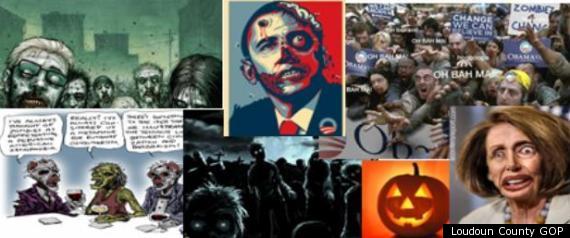
Zombie Obama Email: Virginia GOP Condemns Image Of President With Bullet Through Head

Obama Mailer Zombie

The Huffington Post First Posted: 10/31/11 04:43 PM ET Updated: 10/31/11 05:26 PM ET

WASHINGTON -- Republican Party officials in Virginia have swiftly come out against a Halloween-oriented email message from the Loudoun County GOP committee that depicts President Obama as a zombie with a bullet through his head.

As The Washington Post reports, the message was condemned by the state party and Gov. Robert McDonnell (R), who called the message "shameful and offensive." State GOP chairman Pat Mullins, according to the Post, said the party is in the process of finding those who are responsible for the image.

The Northern Virginia blog Too Conservative, which first posted the county GOP's Halloween email message on Monday, said the image of Obama crossed the line:

Like him or not he is the legitimately elected the President of the United States and Commander in Chief of our armed services in a time of war. THIS IS DISGUSTING AND SHAMEFUL. Someone should send this to the US Secret Service.
The image also includes an image of House Minority Leader Nancy Pelosi (D-Calif.) with an eye bulging out of its socket.

Monday, October 31, 2011

Mark Bray We Will Stay Through the Winter

In this Video Mark Bray stated that the OWS protestors are at Zuccotti Park through the winter.

video by Rafael Martínez Alequín (Oct. 31-11)

Music at Wall Street Occupy

New York City musicians bring their music and joy to supporter of OWS who are spending day and night at Zuccotti Park in downtown Manhattan—the heart of the financial industry in the United States.
video (1) by Rafael Martínez Alequín (Oct. 31-11)
video (2) by Rafael Martínez Alequín (Oct. 31-11)

Generator Seizure Forces 'Occupy' Creativity

After firefighters seized power generators and gas cans from Occupy Wall Street protestors, the demonstrators were forced to come up with a creative solution to power their laptop computers and mobile phones. (Oct. 31)

Sunday, October 30, 2011

Occupy Wall Street Protesters Travel North to Gracie Mansion

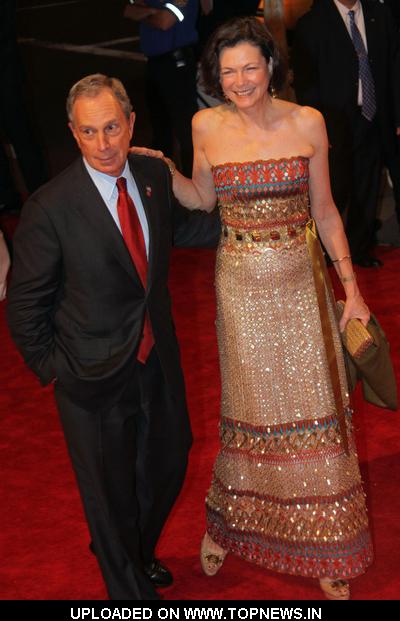
Michael Bloomberg and Diana Taylor at "American Woman: Fashioning a National Identity" Costume Institute Gala - Arrivals

Over 50 OWS protestors went to Gracie Mansion where Mayor Bloomberg was hosting an intimate dinner Sunday night for Senators and corporate executives to urge the Supper Congressional Committee to "go big" and cut $4 trillion in federal spending. The supper committee is composed of 6 Republicans and 6 Democrats. They represent the DemoPublican Party. Both party are controlled by the 1%— Not the 99% of the population. The protester quoted the mayor saying: Let them eat cake, meaning the OWS protesters.

video by Rafael Martínez Alequín (Oct. 30-11)

FAA To Ban Plane Crashes

October 30, 2011 | ISSUE 47•43

WASHINGTON—In what officials are calling "a much-needed policy shift," the Federal Aviation Administration announced this weekend that it would ban all plane crashes. "After a careful review of flight data from the past 25 years, we've determined that customers, pilots, and the airlines themselves would benefit significantly from a strictly enforced no-plane-crash policy," said FAA administrator Randy Babbitt, adding that pilots involved in fiery plane wrecks could face a steep fine or even suspension. "The practice of crashing an airliner into an ocean or mountain will no longer be tolerated. American consumers deserve better." According to industry sources, most commercial airlines are planning to fit in as many crashes as possible between now and Jan. 1, when the ban officially goes into effect.

Occupy Wall Street: Oakland protesters show support for injured Iraq veteran Scott Olsen

Hundreds march through the streets to protest police violence

Sunday, October 30 2011, 2:59 AM

Craig F. Walker/AP

Protester screams as he is arrested during clash with police in Denver.

OAKLAND, Calif. - Anti-Wall Street demonstrators held a festive march through San Francisco Saturday, but tension marked another march in nearby Oakland as protesters rallied against police violence in the name of an Iraq War veteran who was injured during a police clash.

Many of the some 1,000 demonstrators in San Francisco wore costumes as organizers had urged, including suits in an apparent imitation of Wall Street bankers and Robin Hood outfits.

Before the march, left-wing filmmaker Michael Moore told them that excesses on Wall Street had stolen "the futures of so many of our citizens."

San Francisco police escorted the crowd as it snaked through city streets, and police spokesman Albie Esparza said there were no arrests or any disturbances.

The crowd stopped briefly and chanted in support of Scott Olsen, the 24-year-old Iraq War veteran who suffered a fractured skull in an Oakland protest on Tuesday.

Later Saturday night, hundreds marched through the streets of Oakland in protest of police violence, as helicopters hovered overhead and officers in riot gear lined the streets.

The protesters chanted "Whose streets? Our streets!" and "This is what a police state looks like!"

At one point tensions grew as protesters came face-to-face with a line of officers and some began taunting them, according to the Oakland Tribune.

But march organizers began shouting "Peace people up front!" then stood between some of the more unruly demonstrators and police officers. The situation grew calm and the march returned to the Oakland camp where it began.

There were no immediate reports of arrests or injuries.

A hospital spokesman said Olsen's condition was fair Saturday, and he had been moved from Highland Hospital in Oakland to another facility, but he could not say where.

Moore and other prominent figures had asked to visit Olsen, but his parents were restricting visitors to just family, Highland spokesman Vintage Foster told the Oakland Tribune.

"The only thing they care about is their son getting better," Foster said.

Fellow veterans say police fired an object that struck him in the head, but authorities say the object has yet to be definitively established, as well as the person responsible for the injury. His plight has become a rallying cry at Occupy protests around the world.

Oakland Interim Police Chief Howard Jordan defended the officers' action in the Tuesday incident, which stemmed from an effort to drive protesters from the encampment. He said in a statement that officers used what they believed to be the least amount of force possible to protect themselves, but that "all allegations of misconduct and excessive uses of force are being thoroughly investigated."

The encampment at the Oakland plaza near city hall has grown to about 50 tents, with organizers saying up to a thousand people were in the area late Friday with very few police in sight.

Protesters there also announced a strike on Nov. 2, when they will be urging banks and corporations to close for the day.

Across the San Francisco Bay, protesters at the San Francisco encampment reported earlier Saturday that city workers temporarily moved some protesters to clean the plaza.

Christine Falvey, a spokeswoman for that city's mayor, Ed Lee, had said earlier that the camp cannot remain for "too many more days" because of health concerns.

Events in other California cities, including Sacramento, Santa Rosa, Los Angeles and its suburbs, were held Saturday.

The LA protest spread north to the San Fernando Valley, but police said that unlike the ones downtown at City Hall, these demonstrators won't be setting up camp. About 20 protesters calling themselves Occupy San Fernando Valley marched at Van Nuys Civic Center.

Los Angeles police released a statement saying anyone who violates the property's rules by setting up tents or trespassing after hours would be removed.

Protesters said they would move to nearby streets when police tell them to leave

Demonstrators also gathered in Lancaster, about 50 miles north of Los Angeles in the mostly rural Antelope Valley.

In San Diego, police broke up a three-week-old encampment early Friday, arresting 51 people.

In California's agricultural heartland, officials prepared to oust a group of about 30 demonstrators from next to a Fresno County courthouse. County officials said the group's permit would expire midnight Monday, and that demonstrators faced jail time and $500 fines if they remained.

The simmering tension in Denver escalated dramatically Saturday with more than a dozen arrests, reports of skirmishes between police and protesters and authorities firing rounds of pellets filled with pepper spray at supporters of the Occupy Wall Street movement.

Officers in riot gear moved into a park late in the day where protesters were attempting to establish an encampment, hauling off demonstrators just hours after a standoff at the Capitol steps degenerated into a fight that ended in a cloud of Mace and pepper spray.

Denver police spokesman Matt Murray said 15 people were arrested in the evening confrontation, where authorities were moving to prevent protesters from setting up tents in the park, which are illegal. Officals say the demonstrators had been warned several times that the tents would not be allowed and those who attempted to stop police from dismantling the camp gear were arrested. Protesters have been staying in the park for weeks, but tents have repeatedly been removed.

Murray said that most of the protesters were peaceful but there was "just a die-hard group that didn't want to cooperate."